
Sometimes the problem isn't your branding. It's that your business has grown beyond the tools and processes supporting it.
A company can have a great logo, a thoughtful color palette, and a beautifully designed website, but still struggle to look consistent across everything it puts into the world.
The website looks one way. Sales presentations look another. Social media graphics have their own style, and every new campaign seems to require starting from scratch.
It's easy to look at all of that and think it's time for a rebrand.
But what if the brand itself isn't actually the problem?
Sometimes the business has simply outgrown the system that was originally created to support it.
A Brand Guide Isn't the Same as a Design System
Most companies have some version of brand guidelines. Maybe it's a PDF outlining logo usage, colors, typography, and a few examples of how everything should come together.
That's a good starting point, but it doesn't necessarily give a growing team everything it needs.
A brand guide explains what a brand should look and feel like. A design system helps people consistently put that brand into practice.
That might include reusable website components, presentation templates, social media layouts, email designs, and a library of visual elements that work together.
Instead of asking someone to recreate a design every time a new request comes in, teams have a foundation they can build from.
And as a company grows, that distinction becomes increasingly important.
The Signs You've Outgrown Your Current System
One of the clearest signs is when your marketing team spends more time recreating things than creating new ones.
Maybe someone needs a sales presentation, but there isn't an approved template. So they pull slides from three different decks and try to make them work together.
Or a new landing page is needed, but the website doesn't have reusable components. Every page becomes a custom design project.
Over time, small inconsistencies start adding up.
Different teams use slightly different fonts. Buttons change styles between pages. Social graphics look like they belong to different companies. Even simple marketing requests take longer than they should.
None of these issues necessarily means the brand is bad.
They usually mean the team needs a better way to use it.
Why This Happens as Companies Grow
When a company is small, maintaining brand consistency is relatively straightforward. There may only be one designer or a handful of people creating marketing materials.
Everyone knows what the brand is supposed to look like because they're involved in nearly everything.
But growth changes that.
More people start creating content. Different departments need their own materials. Agencies, freelancers, and internal teams all contribute to the brand.
Without shared tools and standards, everyone starts making small decisions independently.
And even when those decisions are reasonable on their own, the result can feel disconnected.
It's rarely one big mistake. It's dozens of little inconsistencies that gradually pull the brand in different directions.
A Design System Should Make Everyone's Job Easier
A good design system isn't about restricting creativity or making every piece of marketing look identical.
It's about removing the repetitive decisions that don't need to be made over and over again.
If the team already has an approved presentation template, they can focus on the story they're telling instead of rebuilding the slides.
If the website has reusable components, new pages can be created faster while maintaining a consistent experience.
If social media templates are flexible enough to accommodate different content, the team can move quickly without losing the brand's personality.
The goal is to give people enough structure to work efficiently and enough flexibility to do good creative work.
Because a design system that nobody wants to use isn't much of a system.
When the Brand Exists, but Nothing Looks Connected
Veritas Group is an example of an established company working to bring greater consistency to its brand across print and digital. Previously, marketing materials were developed without a shared set of visual standards, making it harder to create a recognizable experience across different channels.
The printed materials, digital assets, and other marketing pieces didn't share a cohesive visual language. Each piece existed on its own, making it difficult to establish a recognizable brand experience.
Rather than jumping straight into a rebrand or spending months developing comprehensive guidelines, the work started with the materials the company already needed.
First came rebuilding the printed marketing materials and establishing a more consistent approach to typography, color, layout, and visual hierarchy. From there, those same elements were carried into social media, email, and a landing page for the company's self-storage fund.
The next step is extending that approach across two additional funds, maintaining consistency with the parent brand while allowing each fund to have its own identity within the larger system.
Once those applications are established, they'll form the foundation for formal brand guidelines.
The important part is that the system isn't being created in isolation. It's being built through actual marketing needs, with reusable elements that work across print and digital.
A brochure shouldn't look like it came from a different company than the website. A social media graphic should feel connected to an email campaign. And when the team needs to create something new, they shouldn't have to reinvent the visual direction every time.
That's what a practical design system makes possible.
It creates consistency without requiring every piece to look identical, and it gives the business a foundation that can continue to grow.

When You're Launching an Entirely New Brand
Tenarai represents the other side of the equation.
During the transition from Infogain to Tenarai, the company was introducing a new name and positioning itself as an AI-first brand. That meant the new identity needed to extend well beyond the website.
The work included creating reusable design components and templates for presentations, email, social media, events, and other marketing materials.
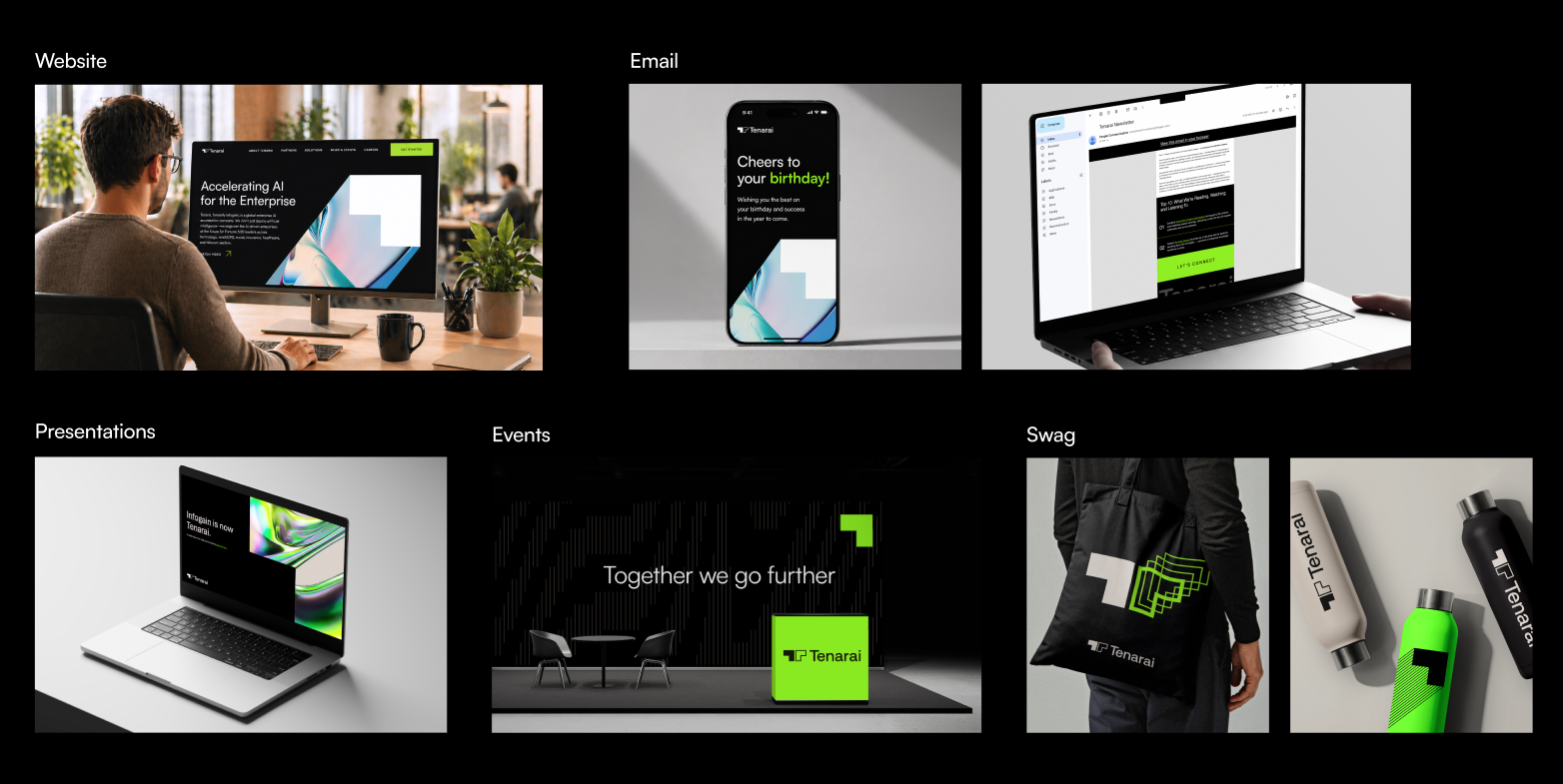
The goal was to make the new brand practical for the teams using it, not just visually consistent in a set of brand guidelines.
A sales team needs presentations they can easily update. Marketing needs templates that work across different campaigns. Designers need reusable components so they're not rebuilding the same elements every time something new comes along.
The system needs to work for all of them, even when they're using different tools.
Both projects started from different places. Veritas needed a more cohesive way to apply an established brand, while Tenarai needed the tools to support an entirely new identity. In both cases, the design system was built around how the brand would actually be used, not just how it would look.
When You Really Do Need a Rebrand
Of course, sometimes the brand itself does need to change.
Maybe the company has entered a new market, shifted its positioning, or evolved beyond the identity it started with.
Maybe the current brand no longer reflects the business or connects with the audience it's trying to reach.
Those are different problems from inconsistent execution.
A design system can't fix unclear positioning or an identity that no longer fits the company.
But a rebrand won't automatically fix broken processes either.
If a company creates a beautiful new identity without giving its teams the tools to implement it, the same inconsistencies can start appearing again.
That's why brand strategy, visual identity, and design systems need to work together.
Before You Rebrand, Ask a Few Questions
If your company is starting to feel visually inconsistent, it's worth understanding why before committing to a full rebrand.
Does the existing brand still reflect who the company is and where it's going?
Are the inconsistencies coming from the identity itself or how people are using it?
Do teams have access to approved, reusable templates and components?
Are different departments creating their own versions of the same materials?
Can new marketing assets be created efficiently without starting from scratch?
Are the current tools practical for the people who need to use them?
The answers can help determine whether the business needs a new identity, a better design system, or a combination of both.
The Goal Isn't Just Consistency. It's Making Growth Easier.
A strong brand should be recognizable, but it should also be practical.
It needs to work across websites, campaigns, presentations, social media, and whatever else the business needs as it grows.
And it needs to be manageable by the people responsible for bringing it to life.
Sometimes that requires a full rebrand. Other times, the biggest improvement comes from creating better systems around what's already working.
The important thing is understanding the difference.
Because your brand might not be broken.
Your company may have simply outgrown the way it's being managed.
About MezCreative
MezCreative helps growing businesses build brands, websites, and digital design systems that are both visually compelling and practical to maintain. With 15+ years of experience across brand design, UX, and digital marketing, the focus is on creating thoughtful, scalable solutions that support real business needs.
